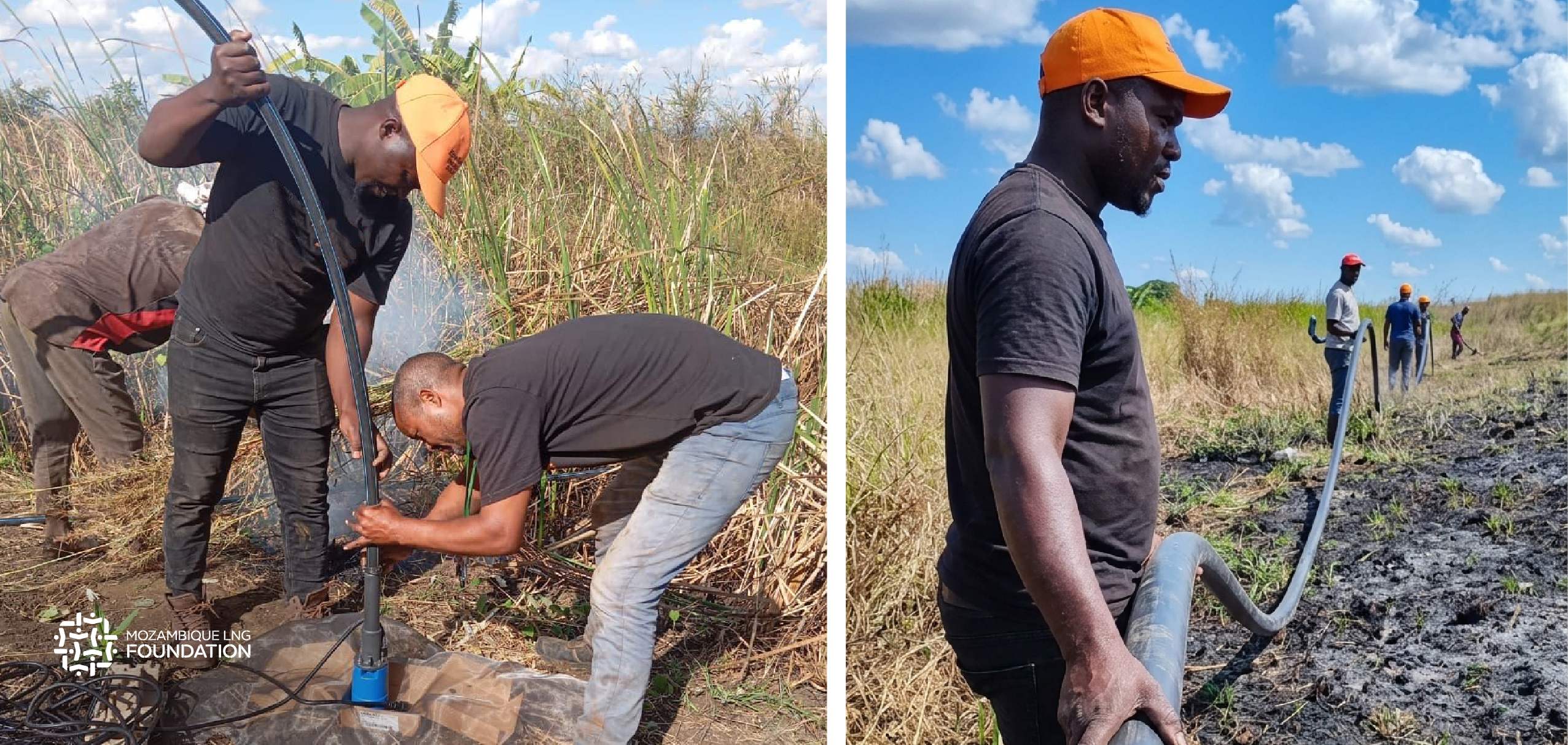
Fifty solar water pumps with irrigation kits are now installed and operating in Cabo Delgado since the end of May this year. Twenty-five more will be installed over the coming month on June.
Energy Changes Everything — A Milestone on the Ground
The figure, in isolation, may seem modest. Its significance lies in the context it sits within.
In Cabo Delgado, access to energy remains one of the principal constraints on rural development. Mozambique’s national electrification rate reached 60.1% in 2024 — 50.5% from the grid and 9.6% off-grid — but the province falls well short of that average, with coverage recorded at just 26.6% as of 2023. For farmers, this means manual irrigation, limited productivity, and a hard ceiling on what any given season can deliver.
In 2025, the Mozambique LNG Foundation launched an integrated renewable energy program in the districts of Balama, Montepuez, and Namuno, built around three components: solar home systems aimed at reaching 28,000 off-grid households; the installation of 50 solar energy systems in public facilities, primarily rural health centers; and the promotion of productive uses of energy — including solar irrigation and electric mobility for small businesses. A Mozambican energy services company has established itself in Cabo Delgado to provide long-term technical support and maintenance. Implementation is coordinated with provincial authorities and articulated with other ongoing development partner initiatives in the region.
The 50 pumps installed are part of the productive-use component. Each one means water on demand, reduced physical labor, and a tangible change in what a smallholding can grow and sell.
Renewable energy is not an end in itself. It is a structural enabler — of more effective services, stronger agriculture, and more resilient local economies across the province.