
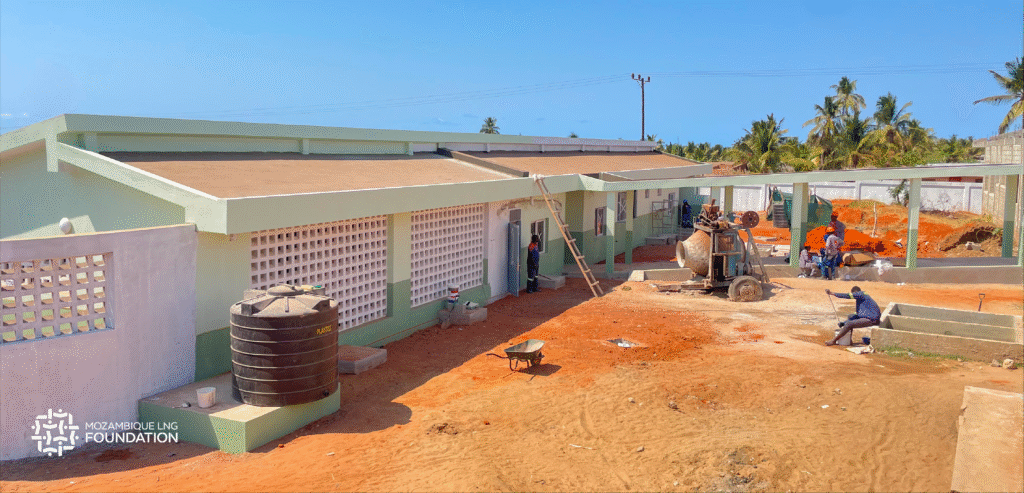
The construction of Murrébué Maternity in Mecúfi District, supported by the Mozambique LNG Foundation, is making visible progress. Once completed and equipped, the maternity unit will directly serve an estimated 30,000 residents of Murrébué and thousands more from neighboring communities.
Murrébué Maternity: construction update
The images below capture this progress, from the start of construction in November 2025 to August 2026. Handover is expected in early September.
Provincial Government of Cabo Delgado concludes business kit delivery to EPA! graduates in Namuno


On August 6, 2026, a ceremony held in Namuno and attended by His Excellency the Governor of Cabo Delgado Province, concluded the delivery of business kits to young people who completed EPA! – Energia para Avançar – across all three districts covered by the program: Balama, Montepuez, and Namuno.
EPA! is the entrepreneurship track of the integrated renewable energy program, carried out under the Memorandum of Understanding with the Provincial Executive Council of Cabo Delgado, with support from the Mozambique LNG Foundation. Through hands-on bootcamps, young people from Balama, Montepuez, and Namuno practiced how to turn access to energy into their own businesses.
In Namuno, 24 participants (9 women, 15 men) completed the training and 10 had access to productive kits – solar water pumps, electric tuk-tuks, and electric motorcycles – to launch or grow their businesses.
This ceremony completes the kit delivery across all three districts.
EPA! is one component of the broader integrated renewable energy program the Foundation implements across Balama, Montepuez, and Namuno, which targets include the delivery of 28,000 solar home systems and 40 solar systems in health centers and public facilities, alongside other productive uses of energy.
Provisional Handover of the Quirinde and Ntotwe Community Health Posts


On July 15, the Provincial Director of Health of Cabo Delgado, Dr. Magid Sabune, visited the Quirinde Community Health Post, in Palma District, and the Ntotwe Community Health Post, in Mocímboa da Praia District, for the provisional handover of their infrastructure, marking the completion of construction works.
The two units are part of a set of eight community health posts to be built in priority rural locations across the province, following the Ministry of Health’s standard design, with the support of the Mozambique LNG Foundation. Each post is designed to provide basic consultations, maternal and child health services, and referral to higher-level care for approximately 2,500 people, and includes solar-powered access to water and electricity.
Community health posts, alongside an expanded network of multipurpose health agents, form the core of the Ministry of Health’s Community Health Subsystem Strategy.
+VALOR: 3,708 Farmers in Chiúre District Receive Vegetable Seeds and Farming Tools


The modernization of family farming and the development of agricultural value chains are among the priorities set by the Government of Mozambique for the agricultural sector under the Strategic Plan for Agricultural Sector Development. +VALOR, a three-year program supported by the Mozambique LNG Foundation and implemented in Chiúre District, Cabo Delgado, operates within that framework.
In early July, vegetable seeds and farming tools were distributed to 3,708 farmers, organized in 119 groups across 17 communities in the district. The crops covered — tomato, kale, lettuce, and sweet pepper — were selected for their short growing cycle and steady demand in local markets, allowing households to combine improved nutrition with income generation.
Distribution is the first step in a structured support program. Over the coming three months, field assistants, extension officers, and lead farmers will work directly with the groups, providing technical support on garden establishment and management. Over its three years, +VALOR aims to support approximately 5,000 smallholder farmers in the district.
+VALOR: Code of Conduct and field visit to Chiúre communities


In late July, the +VALOR technical team — a three-year agricultural value chain development program supported by the Mozambique LNG Foundation — took part in a training session on institutional policies and the safeguarding Code of Conduct, followed by a visit to the communities covered by the program.
The training brought together field extension officers and the wider project technical team, with the objective of strengthening understanding and application of safeguarding policies in day-to-day field work. Content covered ethics, integrity, accountability, and the prevention of exploitation, abuse, and harassment, with particular attention to the protection of communities and vulnerable groups.
The Code of Conduct sets the standards required of everyone working directly with communities — extension officers, field assistants, and the wider technical team. In a program whose delivery rests on regular and sustained contact with farmers and their households, those standards define how that contact is conducted.
The field visit took the team to the communities of Singano, Namania, Marrupa, and Mocopote, where horticultural nurseries established following the July distribution of seeds and farming tools were observed. The team followed the progress of the planted crops and gathered farmers’ observations on the program directly.
These activities form part of the +VALOR accompaniment model, which combines regular technical support to farmer groups with conduct standards applying across the implementation team. Over its three years, the program aims to support approximately 5,000 smallholder farmers in the district.
+VALOR: Participation in Community Development Committees Session in Chiúre


In July, the +VALOR team – an agricultural development program of the Mozambique LNG Foundation – took part in a working session on community development committees in Chiúre District, Cabo Delgado.
The session brought together representatives of the Chiúre District Government, including the District Administrator, Heads of Administrative Posts, and the Director of District Services for Education, Youth and Technology, alongside community leaders, village chiefs, and representatives of non-governmental organizations.
Discussions focused on strengthening community participation and promoting inclusive decision-making, with particular attention to ensuring that women, young people, persons with disabilities, and other vulnerable groups can contribute to the decisions shaping the development of their communities.
Community development committees identify local needs, define development priorities, and form the link between communities, local authorities, and development partners. For +VALOR, whose delivery rests on work with 119 farmer groups across 17 communities in the district, that participation architecture is the framework within which the program operates.
Access to energy advances in Montepuez with first solar home system installations


In coordination with the provincial authorities of Cabo Delgado, the first solar home systems were installed on August 3 in Mapupolo, Montepuez district.
The installation is part of the Mozambique LNG Foundation’s integrated renewable energy program, which covers the districts of Balama, Montepuez, and Namuno and is designed to reach 28,000 households currently off the national grid.
The program is aligned with the objectives of the Government of Mozambique’s Energy for All strategy and responds to one of the province’s identified development priorities. According to the World Bank, Cabo Delgado’s electricity access rate stood at 26.6% in 2023, against a national average of 60.1% in 2024. Nationally, only 6% of rural residents have access to electricity (INE, 2022).
Household electrification is one of three components of the program. The others are the installation of 40 solar systems in public facilities, primarily rural health centers, and the promotion of productive energy uses, including solar irrigation and electric mobility for small businesses.
By combining household electrification, social infrastructure support, and productive energy solutions, the program positions renewable energy as a structural enabler of better services, stronger agriculture, and more resilient local economies across Cabo Delgado.
Birth Registration Campaign Launched in Palma and Pemba

The Government of Cabo Delgado Province, through the Provincial Service for Justice and Labor (SPJT-CD), launched a Birth Registration and Birth Certificate Issuance Campaign on July 21, 2026, in Palma district, and on July 24 in the city of Pemba, with the support of the Mozambique LNG Foundation.
The campaign will reach 40,000 beneficiaries — 20,000 in Palma district and 20,000 in the city of Pemba. Its objective is to remove barriers to the exercise of citizenship and to access to basic social services, currently constrained by the lack of civil identification documents.
On the ground, the process is carried out by 20 Birth Registration Agents and 10 Validators (Registrars) trained by SPJT-CD, covering the entire registration chain — from notification to the issuance of certificates — and strengthening SPJT-CD’s institutional capacity.
The initiative stems from the Memorandum of Understanding signed between SPJT-CD and the Mozambique LNG Foundation and falls within the Government’s Five-Year Plan 2025–2029, under the strategic actions of ensuring access to justice and simplifying civil registration and identification procedures.
Provincial Government of Cabo Delgado promotes delivery of business kits to young entrepreneurs in Balama and Montepuez

Under the Memorandum of Understanding between the Provincial Government of Cabo Delgado and the Mozambique LNG Foundation, business kits were delivered to young people who completed EPA! – Energia para Avançar. The ceremonies took place in Balama and Montepuez, both attended by His Excellency the Governor of Cabo Delgado Province.
EPA! is the entrepreneurship track of the integrated renewable energy program, implemented by the Mozambique LNG Foundation in partnership with Epsilon Energia Solar and Fundação Ideialab, through hands-on, learning-by-doing bootcamps in the districts of Balama, Montepuez, and Namuno, helping young people turn access to energy into their own businesses.
37 participants in Balama and 17 in Montepuez completed the training. The top-performing participants had access to productive kits – solar water pumps, electric tuk-tuks, and electric motorcycles – to launch or grow their businesses.
EPA! is part of the integrated renewable energy program implemented in the districts of Balama, Montepuez, and Namuno, which also includes the installation of home solar systems and systems in public infrastructure, along with other productive uses of energy.
Learn more here: Integrated Renewable Energy Program
Last Mile Learning Project Concludes in Mecúfi District
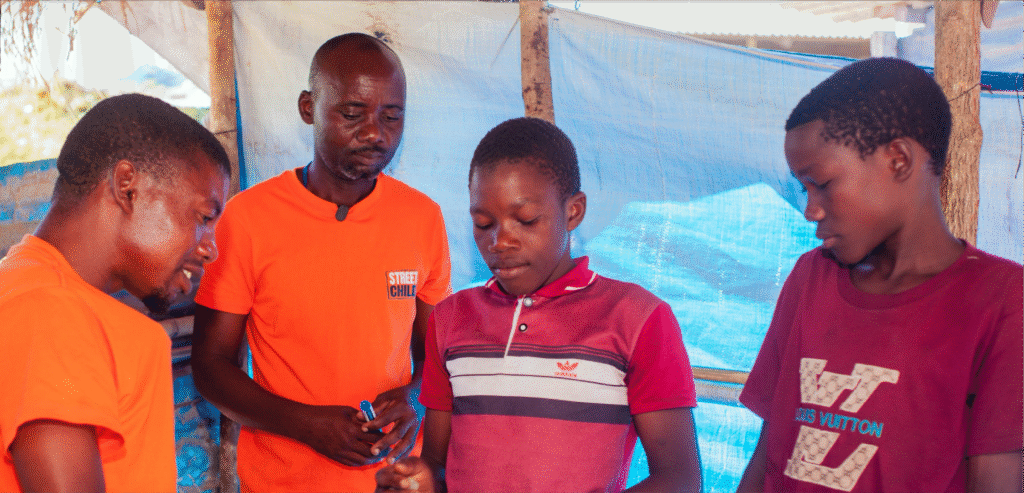
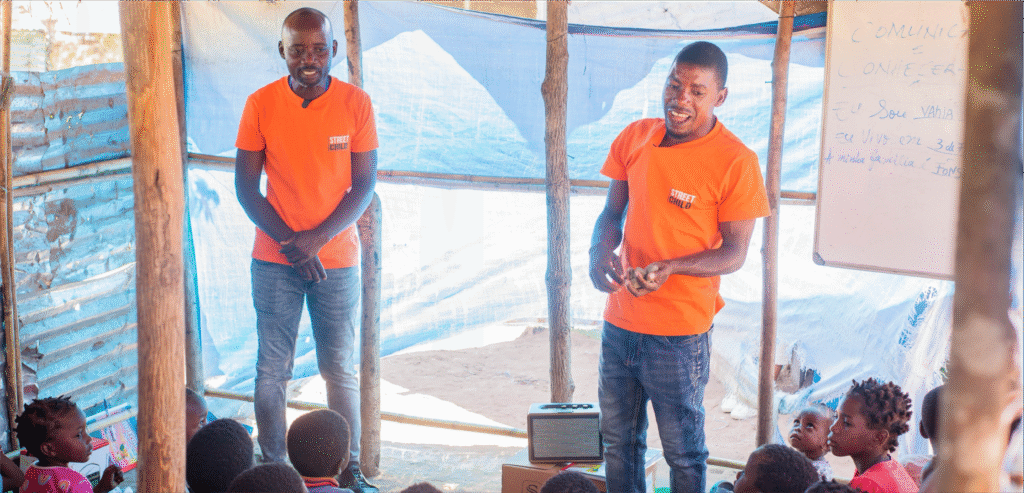
Our Last Mile Learning project has concluded in Mecúfi District, Cabo Delgado. The project aimed to sustain children’s access to education in communities where formal schooling is disrupted or difficult to reach.
The program combined facilitator training, literacy and numeracy materials adapted into local languages-Emakhuwa, Makonde, and Kimwani-learning kits, and recorded audio content broadcast through community radio, extending structured learning opportunities to vulnerable children affected by conflict, displacement, climate shocks, and school disruption.
Results at a glance:
- 30 facilitators trained in the Last Mile Learning approach, meeting 100% of the target;
- 8,000 learning kits distributed to children;
- 32,776 children and caregivers reached through community radio programming, reaching 163% of the original target of 20,000.
Preliminary learning outcome data recorded gains across several literacy and numeracy indicators, including improvements in reading, word formation, addition, subtraction, and multiplication.
According to the project’s implementation report, the results provide a strong foundation for continued investment in resilient education programming in Cabo Delgado, and reinforce the value of strengthening local capacity and coordination with education authorities to help communities protect children’s learning during future emergencies.