
Bringing solar power to off-grid households and public services in Cabo Delgado
Integrated Renewable Energy Program

Why this matters
Access to electricity remains one of the most fundamental development constraints in Cabo Delgado. While Mozambique’s national electrification rate reached 60.1% in 2024, Cabo Delgado lags far behind, at just 26.6% in 2023 — the most recent provincial figure available. The urban-rural gap is stark: nationally, only 6% of rural residents have electricity, compared with 57% of urban residents – and in rural Cabo Delgado the situation is even more acute. In many rural health facilities, maternity wards operate without power, forcing staff to deliver babies by the light of a mobile phone.
Sources: World Bank — Mozambique Electricity Access Report, 2023; Energypedia — Energy Access in Mozambique, 2024; INE, 2022; Government of Mozambique — Energy for All Strategy.
The project
The integrated renewable energy program combines three approaches in the districts of Balama, Montepuez, and Namuno: installing solar home systems in households currently off the national grid; installing solar energy systems in public facilities, mainly rural health centers and schools; and promoting productive uses of energy, including solar irrigation and electric mobility for small businesses. A Mozambican energy services company has been established in Cabo Delgado to provide long-term technical assistance and maintenance to both households and public facilities. The program positions renewable energy not as an end in itself, but as a structural enabler of better services, stronger agriculture, and more resilient local economies.
Targets
- 28,000 solar home systems installed.
- 40 solar systems installed in health centers and schools.
- Focus districts: Balama, Montepuez, and Namuno.
- Productive energy supporting agriculture, mobility, and small business.
- Local energy services company established in Montepuez for long-term maintenance.
Solar Systems in Public Infrastructure
Electricity determines the quality of public services. In a health center, it powers lighting in emergency rooms and maternity wards at night, keeps equipment running, and ensures continuity of care. For this reason, the program installs 5 kW solar photovoltaic systems with battery storage in rural health centers in Balama, Montepuez and Namuno that have no connection to the national grid. The target also includes schools
Solar Home Systems
Many households in Balama, Montepuez and Namuno live outside the national electricity grid. The program plans to install 28,000 solar home systems in these households, expanding access to clean and sustainable energy and improving family living conditions.
EPA – Energy to Advance
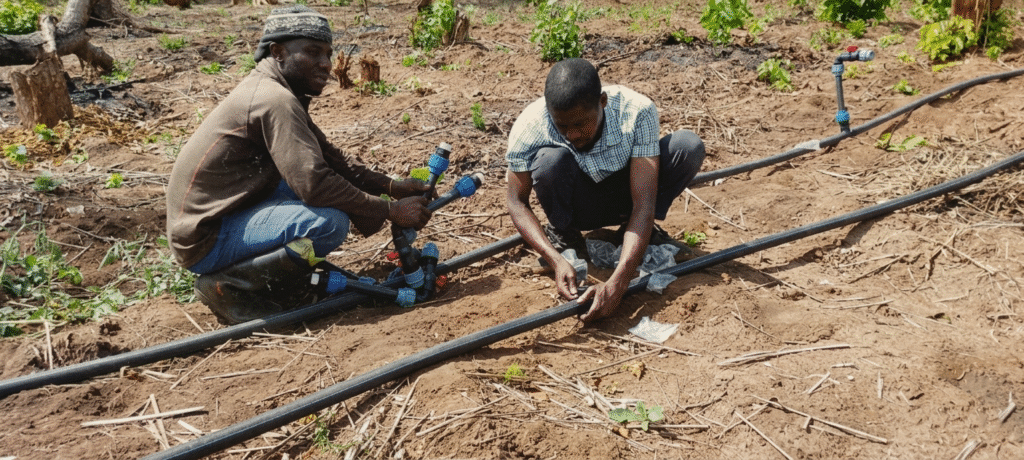
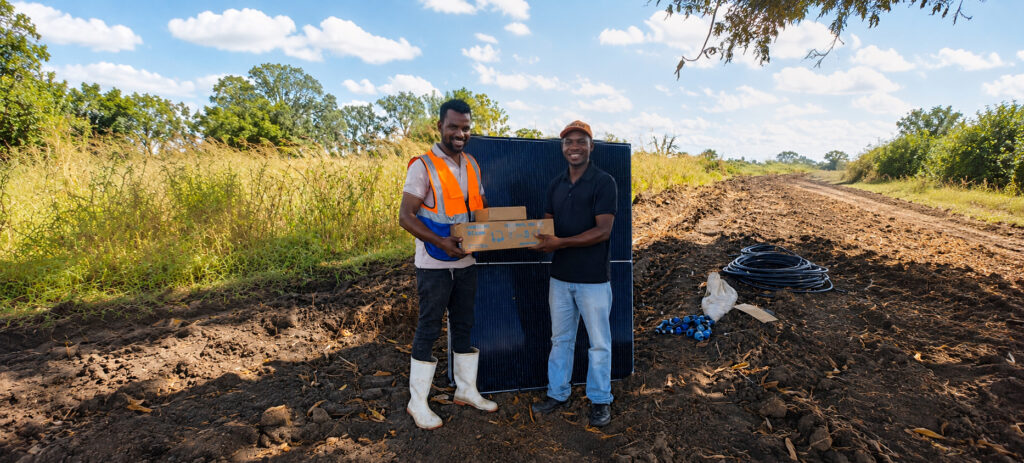
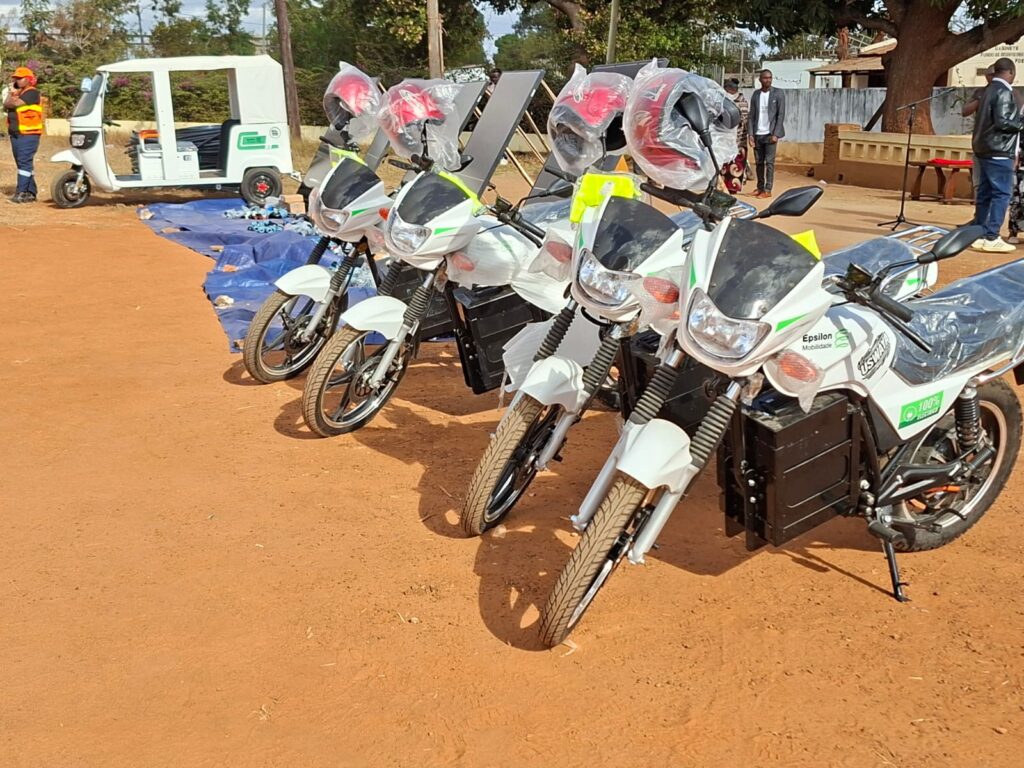
EPA links access to energy with local entrepreneurship. Under the initiative, 78 participants (17 in Montepuez, 37 in Balama and 24 in Namuno) completed business management training. At the end of each training, participants pitched their business ideas, and the authors of the strongest proposals gained access to purchase productive equipment at heavily subsidized prices: solar water pumps with irrigation kits, electric motorbikes and electric tuk-tuks. Ten electric motorbikes, 5 electric tuk-tuks and 15 irrigation systems were delivered, bringing electric mobility to small businesses in Cabo Delgado.
Solar Water Pumps
A total of 90 solar irrigation systems were installed on 0.25 ha plots in the districts of Balama, Montepuez and Namuno, completing the planned distribution. Each system combines a water pump, a solar panel and an irrigation kit, using sprinkler or gravity-fed irrigation. The systems improve access to water for farming, reduce reliance on rain-fed agriculture and increase farmers’ productive diversity.