
Safe drinking water for 30,000 residents of Pemba’s oldest neighbourhood
Paquitequete Solar Water System
Completed
Why this matters
Access to safe drinking water is one of the most critical factors for public health, child survival, and community resilience in Mozambique. Despite national progress, coverage remains significantly lower in northern provinces such as Cabo Delgado, where displacement and climate disruption place constant pressure on already limited infrastructure. Paquitequete, one of Pemba’s oldest and most densely populated neighborhoods, has absorbed growing numbers of internally displaced people arriving by boat from northern districts since 2020. Fresh groundwater existed beneath the area, but without a functioning capture and distribution system, residents had no reliable way to access it.
Sources: WHO/UNICEF Joint Monitoring Program (JMP), 2022; UN SDG 6; IOM Displacement Tracking Matrix; OCHA Cabo Delgado displacement reports.
The project
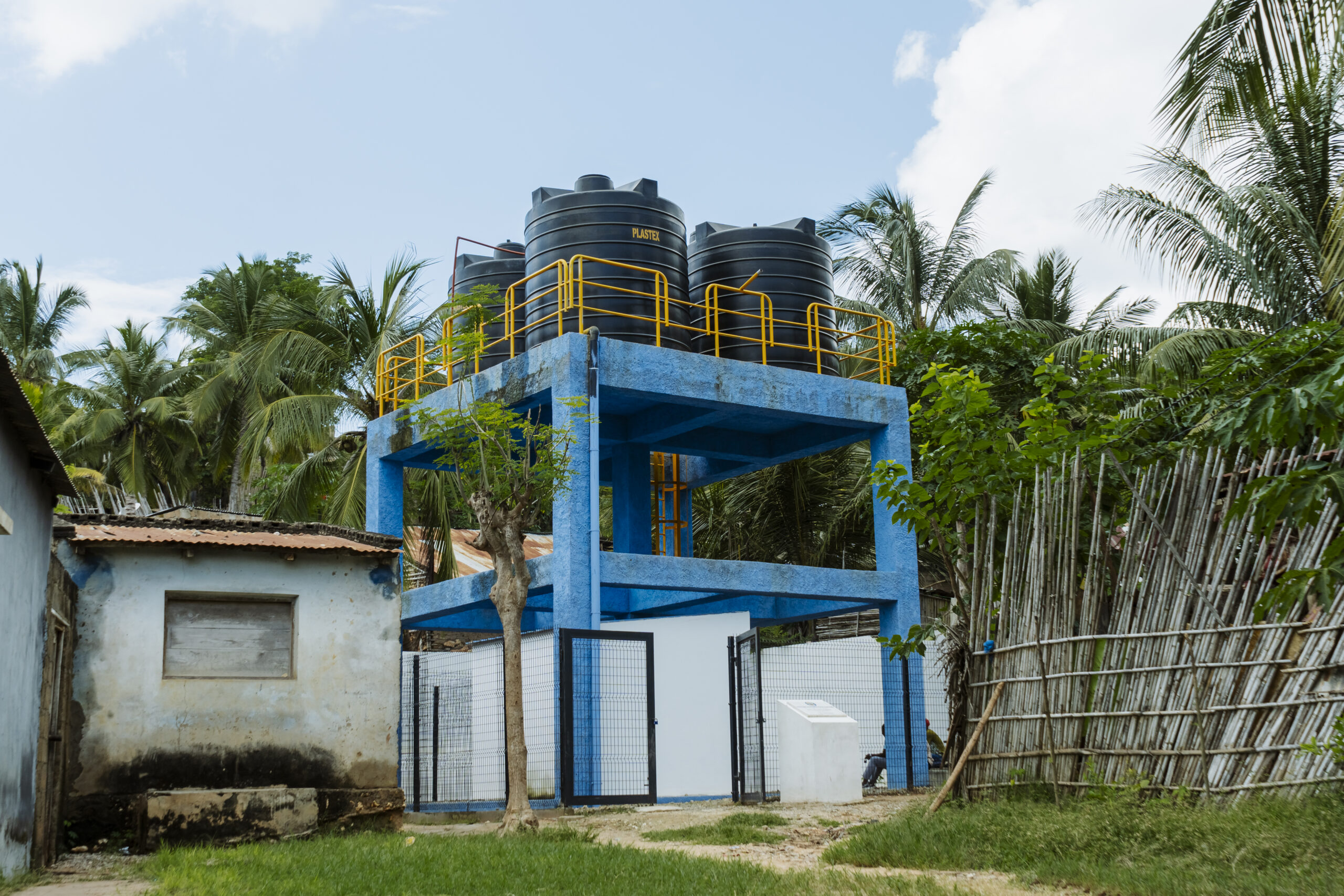
In March 2025, a solar-powered water supply system was inaugurated in Paquitequete, providing safe drinking water to around 30,000 residents. Implemented in partnership with the Pemba Municipal Council, the system includes a 300,000-litre underground reservoir, a 30,000-litre elevated tank, and five solar-powered distribution stations, ensuring a reliable, climate-resilient supply. The intervention also created a community water management committee, whose members were trained to oversee local operations, promote responsible water use, and ensure long-term continuity of service.
Results
- 30,000 residents served.
- 5 solar-powered distribution stations installed.
- 330,000 litres of total storage capacity.
- Community water management committee created and trained.